The Strategic Ascent of C&I Energy Storage: Powering the Next Industrial Revolution in 2025
The Strategic Ascent of C&I Energy Storage: Powering the Next Industrial Revolution in 2025
Introduction: A Landmark Year for Distributed Power
As we move through 2025, the global energy landscape is undergoing a fundamental restructuring. For decades, Commercial and Industrial (C&I) entities were passive consumers of the grid, vulnerable to price volatility and infrastructure instability. However, 2025 has officially become the "Year of the Battery" for the private sector. From semiconductor giant fabs in Taiwan to automotive assembly lines in Germany and textile mills in Southeast Asia, Commercial and Industrial Energy Storage Systems (C&I ESS) are no longer peripheral experiments—they are central pillars of corporate operational strategy.
The Economic Catalyst: The Death of the "Green Premium"
The most significant headline of 2025 is the collapse of battery prices to historic lows. Driven by massive overcapacity in lithium-iron-phosphate (LFP) cell manufacturing and simplified system architectures, the cost per kilowatt-hour ($/kWh) has dropped by over 30% compared to late 2023.
In major markets like China, North America, and the European Union, the "Green Premium"—the extra cost businesses used to pay for sustainable tech—has vanished. Industry data indicates that the average investment payback period for a 200kWh–2MWh C&I system has shrunk from 8–10 years to a lucrative 4.5–6 years. In regions with high peak-demand charges or volatile spot market prices, the Internal Rate of Return (IRR) now routinely exceeds 15%, transforming energy storage from a "sustainability cost center" into a "financial profit center."
Beyond Arbitrage: The Multi-Value Stack
While "Peak Shaving" and "Valley Filling" (charging during low-cost night hours and discharging during expensive daytime peaks) remain the bread and butter of the industry, 2025 has seen the emergence of a "Multi-Value Strategy."
1. The "Life Insurance" of Grid Resilience
Extreme weather events and the integration of intermittent renewables have made grid instability a global norm. For high-precision industries, a "micro-interruption"—a power dip lasting less than 100 milliseconds—can result in millions of dollars in losses due to ruined batches or equipment recalibration. Modern C&I ESS now serve as high-capacity Uninterruptible Power Supplies (UPS), offering seamless transition to island mode that saves both assets and delivery timelines.
2. Carbon Compliance and the CBAM Era
With the full implementation of Europe’s Carbon Border Adjustment Mechanism (CBAM) and similar mandates in the US, "Scope 2" emissions (indirect emissions from purchased electricity) are now a financial liability. By pairing onsite solar PV with storage, companies are achieving "24/7 Green Power," significantly lowering their carbon footprint and ensuring their products remain competitive in a decarbonizing global market.
3. The Rise of "Energy-as-a-Service" (EaaS)
2025 has seen a shift in how energy storage is financed. Small and Medium Enterprises (SMEs) are increasingly adopting the EaaS model. Under these "Zero-CAPEX" arrangements, third-party developers install, own, and maintain the battery cabinet. The business simply pays for the service or shares the savings. This model has democratized access to storage, allowing even smaller factories to benefit from advanced energy management without the upfront financial burden.
Technological Evolution: Intelligence and Safety
The hardware of 2025 is smarter and safer than ever before. Three key trends are dominating the technical landscape:
AI-Driven EMS: The "Brain" of the storage system—the Energy Management System (EMS)—now uses machine learning to predict factory load patterns and weather fluctuations. It automatically decides when to trade energy back to the grid (Virtual Power Plant participation) or when to hoard power for upcoming production surges.
Enhanced Fire Safety: Following high-profile incidents in previous years, 2025 has seen the universal adoption of "Triple-Tier" safety protocols. Systems now feature cell-level internal gas detection, active liquid cooling, and localized aerosol fire suppression as standard features, meeting the rigorous NFPA 855 and UL 9540 standards.
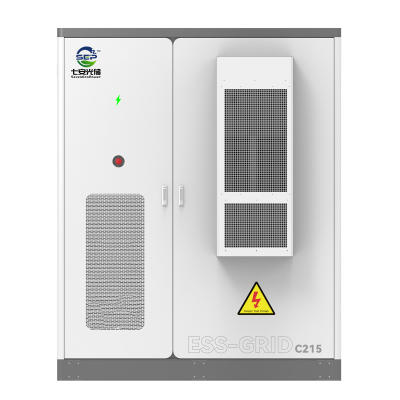
Modular "Plug and Play" Design: Integration has reached a point where a 200kWh unit can be commissioned in less than 48 hours. The "all-in-one" cabinet—integrating batteries, PCS, and fire safety—minimizes onsite engineering risks and costs.
Regional Hotspots and Global Outlook
China: Remains the world’s largest market by volume, driven by aggressive provincial subsidies and the widest peak-to-valley price spreads in history.
Europe: Focused on energy independence. The "Solar-on-Buildings" mandates across the EU are making storage a mandatory companion for every new industrial roof.
North America: The Inflation Reduction Act (IRA) continues to provide a tailwind, particularly for systems with domestic content, though supply chain bottlenecks for transformers and high-voltage components remain a challenge.
The Challenges Ahead: The Road is Not Entirely Smooth
Despite the record-breaking growth, the industry faces three primary hurdles in the second half of 2025:
Regulatory Red Tape: In many jurisdictions, the process for interconnecting a battery system to the utility grid remains frustratingly slow, sometimes taking longer than the actual construction of the factory.
Raw Material Sensitivity: While prices are low now, the concentrated nature of the battery supply chain leaves the C&I sector vulnerable to geopolitical trade tensions.
Workforce Gap: There is a global shortage of certified technicians capable of installing and maintaining high-voltage BESS, leading to higher labor costs and project delays.
Conclusion: The New Industrial Standard
As we look toward the 2030 horizon, the trajectory is clear. The commercial and industrial sectors are no longer just passive victims of energy costs; they are becoming active participants in a decentralized, resilient, and green energy network.
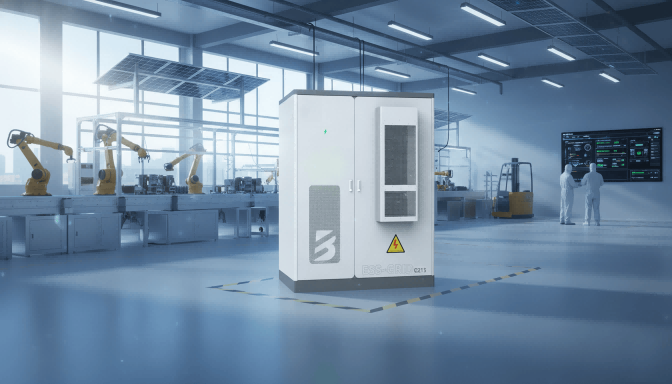
The storage cabinet standing outside the factory gate in 2025 is more than just a box of batteries—it is a symbol of energy autonomy. For the modern CEO, investing in storage is no longer a matter of "if," but a matter of "how fast." In the competitive landscape of the late 2020s, the most efficient companies won't just be the ones with the best products, but the ones with the smartest energy strategies.