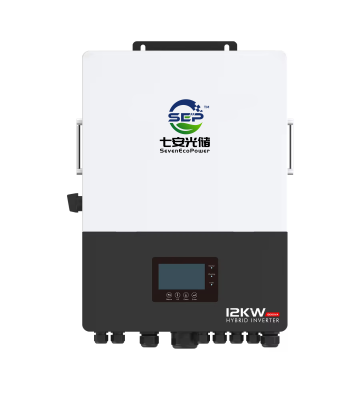
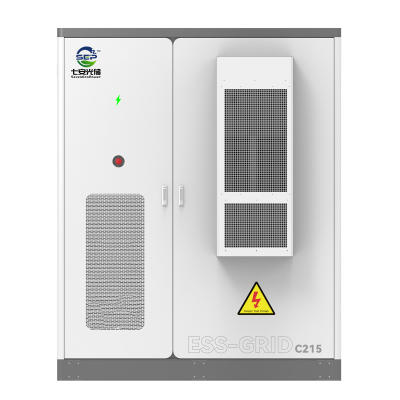
News Feature: The Era of "Solar 2.0" – How Residential Storage is Reshaping the Modern Grid
The Great Balancing Act
For decades, residential solar was a one-way street. Homeowners installed panels, generated power during the day, and sent the excess back to the grid for a credit. But in 2025, the landscape has fundamentally shifted. We have entered the era of "Solar 2.0," where the solar panel is no longer a standalone product, but half of a larger ecosystem: the Home Energy Management System (HEMS).
The catalyst for this change has been the rapid integration of battery storage. According to the latest Solar Market Insight Report, nearly 40% of all new residential solar installations in the United States now include a battery component, up from less than 10% just five years ago. In markets like California and Puerto Rico, that "attachment rate" frequently exceeds 80%.
Why the Shift? Resilience and Regulation
Two primary drivers are pushing homeowners toward storage: the increasing frequency of grid failures and a sea change in utility rate structures.
1. The Resilience Factor As extreme weather events—from record-breaking heatwaves in the Southwest to intensified hurricane seasons on the East Coast—stress the aging electrical grid, the "backup power" value of a battery has transitioned from a luxury to a necessity. For many, the ability to keep the lights on and the refrigerator running during a blackout is the primary reason for the investment.
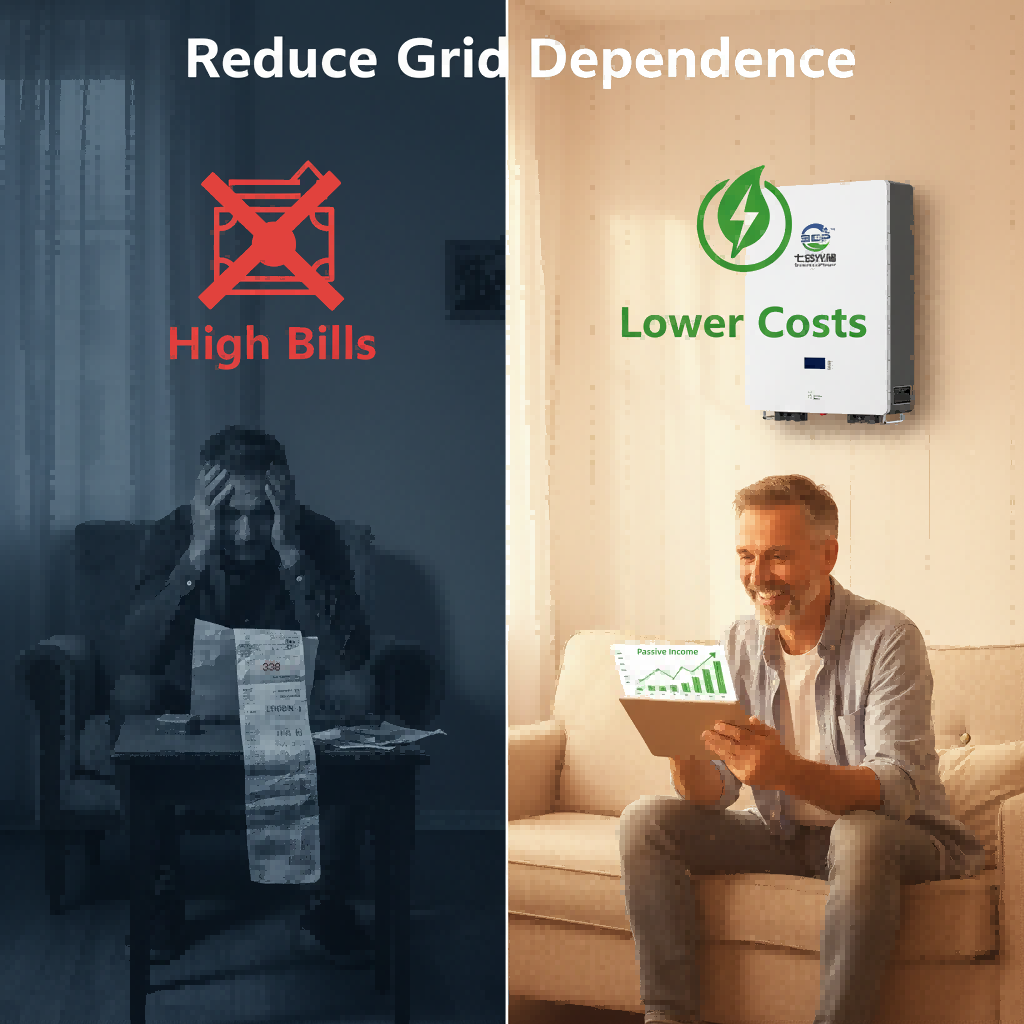
2. The End of Traditional Net Metering Technically, the most significant shift has been policy-driven. For years, "Net Metering 2.0" allowed users to sell power back at retail rates. However, with the transition to "Net Billing" (such as California’s NEM 3.0), the export rate for solar energy dropped by roughly 75%. This made it financially disadvantageous to send power back to the utility. Instead, the smartest move is to "self-consume"—storing that energy in a battery during the day and using it at night when grid prices are at their peak.
Technological Evolution: AI and VPPs
The hardware itself has undergone a transformation. The 2025 generation of home batteries, led by companies like Tesla (Powerwall 3), Enphase, and various LFP (Lithium Iron Phosphate) providers, are more than just chemical buckets for electricity. They are powered by Artificial Intelligence.
Modern systems use predictive algorithms to analyze weather forecasts and historical usage patterns. If a storm is approaching, the system automatically prioritizes reaching 100% charge. If electricity prices are set to spike at 6:00 PM, the system intelligently discharges to shave off the expensive peak usage.
Perhaps most exciting is the rise of Virtual Power Plants (VPPs). In 2025, tens of thousands of individual home batteries are being networked together to act as a single, massive utility-scale battery. When the grid is under stress, the utility can "rent" power from these distributed home batteries, paying homeowners for the service. This turns the home battery from a cost center into a revenue-generating asset.
The Financial Reality: Costs and Incentives
Despite the clear benefits, the initial "sticker shock" remains a hurdle. A typical 7 kW solar system paired with a 13.5 kWh battery can cost between $25,000 and $35,000 before incentives.
However, the Inflation Reduction Act (IRA) continues to provide a 30% federal tax credit, significantly lowering the barrier to entry. In 2025, we are also seeing more "third-party ownership" models where companies install the equipment for no upfront cost and charge the homeowner a monthly lease fee that is lower than their previous utility bill.
Furthermore, the cost of battery cells has continued its downward trajectory. Technological shifts toward LFP chemistry—which avoids the use of cobalt and nickel—have not only made batteries safer and longer-lasting but have also helped insulate the supply chain from geopolitical volatility.
The Road Ahead: Challenges to Overcome
The transition is not without friction. Three main challenges define the market in late 2025:
Permitting and Interconnection: In many regions, the "soft costs"—the time and paperwork required to get a permit from local authorities and permission to plug into the grid from utilities—can add months to a project’s timeline.
The Installer Gap: There is a critical shortage of qualified electricians trained in high-voltage DC storage systems. This labor shortage has kept installation prices higher than they would be in a more saturated labor market.
Grid Infrastructure: Most local distribution grids were designed for one-way flow. As more homes become "prosumers" (producers and consumers), utilities must invest billions in upgrading transformers and substations to handle the bidirectional load.
Conclusion: A Decentralized Future
As we look toward 2026, the trend is clear: the home of the future is a micro-utility. The combination of residential PV and energy storage is democratizing the energy sector, moving power away from centralized fossil-fuel plants and into the hands of individual citizens.
While the hardware is important, the real revolution is in the software and the policy. When every home has the capacity to generate, store, and share its own clean energy, the entire grid becomes more stable, more affordable, and infinitely more sustainable. The "Solar 2.0" revolution isn't just about panels on a roof; it’s about a fundamental rethink of our relationship