China’s Green Leap: Navigating the 2026 Energy Transition Crossroads
I. The Infrastructure Milestone: Beyond 1,500 Gigawatts
By the end of 2025, China’s total installed capacity for renewable energy exceeded 1,500 gigawatts, officially surpassing thermal power for the first time in history. The sheer scale of this deployment is staggering. In 2025 alone, China installed more solar PV capacity than the entire cumulative capacity of the United States.
The "New Trio" —electric vehicles (EVs), lithium-ion batteries, and photovoltaic products—has become the primary engine of China’s export economy. According to recent data, clean tech contributed over 10% of China’s GDP in 2025, effectively offsetting the economic drag from the cooling real estate sector. However, this massive supply has led to a "cleantech paradox": while global prices for solar panels have plummeted by over 90% since 2010, Chinese manufacturers are facing intense "involution" (internal competition) and thinning profit margins.
II. The 2026 Pivot: From Quantity to Quality
As we enter 2026, the industry is witnessing a strategic shift. The National Energy Administration (NEA) has signaled that the "gold rush" phase of solar installation may slow down. BloombergNEF projections suggest that after a peak of 372 GW of solar deployed in 2025, 2026 might see a slight contraction to 341 GW.
This is not a sign of failure, but of structural adjustment. The focus has shifted to:
Grid Modernization: China is investing over $80 billion annually into ultra-high voltage (UHV) transmission lines to move power from the sun-drenched Gobi Desert to the industrial hubs of the East.
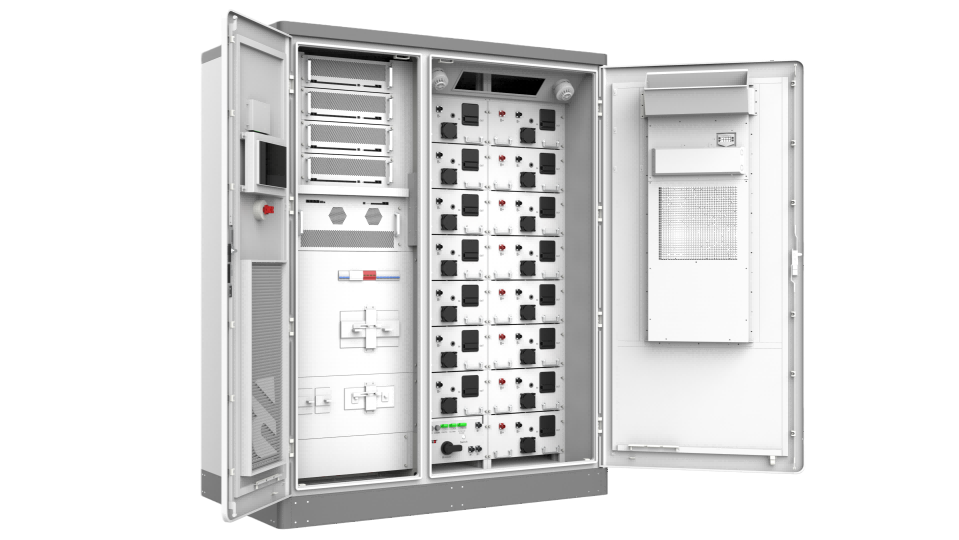
Energy Storage: The volume of installed battery storage tripled between 2022 and 2025. In 2026, the "long-duration energy storage" (LDES) sector is expected to take center stage to solve the intermittency of wind and solar.
Market-Based Pricing: The era of fixed feed-in tariffs is ending. Power market reforms are now forcing renewable providers to compete in spot markets, encouraging efficiency but also introducing price volatility.
III. The EV Revolution: Entering the "Post-Subsidy" Maturity
The Chinese New Energy Vehicle (NEV) market reached a critical tipping point in 2025, with NEVs accounting for over 50% of monthly new car sales. By 2026, the narrative has shifted from "can they build them?" to "how will they lead globally?"
Technological Frontiers: 2026 is being hailed as the "Year of Solid-State." Leading firms like CATL and BYD are beginning pilot production of semi-solid and solid-state batteries, promising ranges exceeding 1,000km and enhanced safety.
The Export Struggle: Facing high tariffs in the EU and North America, Chinese EV makers are pivoting their strategy. Instead of just exporting cars, they are exporting "supply chains." Massive "Gigafactories" are being built in Hungary, Brazil, and Thailand, localized to bypass trade barriers and tap into Global South markets.
IV. Challenges: Overcapacity and Coal’s Lingering Shadow
Despite the green success, two major shadows loom over the industry in 2026.
1. The Overcapacity Crisis: The solar and battery sectors are grappling with massive oversupply. In 2025, total output value in the solar sector plunged by 38% despite volume growth, as prices fell below production costs for many Tier-2 players. 2026 is expected to be a year of "The Great Consolidation," where smaller, less efficient firms will be acquired or go bankrupt, leaving a few dominant "national champions."
2. The Coal Dilemma:While renewables provide the capacity, coal still provides the security. In 2025, China continued to permit new coal-fired plants to serve as "peaking power." The challenge for 2026 is the "Dual Carbon Control" system—moving from controlling "energy intensity" to controlling "total carbon emissions." This policy shift is crucial for ensuring that the renewable surge actually translates into a reduction in fossil fuel burning.
V. Global Implications: The "Green Silk Road"
China’s influence extends far beyond its borders. By 2026, Chinese firms are responsible for over 60% of utility-scale solar projects in Sub-Saharan Africa and Southeast Asia. Through the "Green Silk Road" initiative, China is not only providing hardware but also the "deployment know-how."
International agencies like IRENA report that China’s integrated supply chains have reduced the global cost of the energy transition by at least 40%. Without Chinese manufacturing scale, the Paris Agreement goals would be economically unattainable for most developing nations.
VI. Conclusion: A Pervasive Green Future
As China prepares its 15th Five-Year Plan (2026–2030), the new energy industry is no longer an "emerging" sector—it is the backbone of the "New Quality Productive Forces."
The journey forward is complex. It involves balancing domestic energy security with global trade tensions, and technological innovation with market profitability. However, the momentum is irreversible. In 2026, the world is not just watching China’s energy transition; it is being reshaped by it.