Beyond Peak Shaving: Battery Cabinets Become the Lifeblood of Modern Enterprises
C&I Energy Storage: From "Cost Center" to "Profit Center" in 2025
As the global energy transition accelerates, 2025 has become a landmark year for Commercial and Industrial (C&I) Energy Storage Systems (ESS). Once viewed as a luxury for sustainability-focused tech giants, large-scale battery systems are now becoming a "must-have" infrastructure for traditional manufacturing, chemical plants, and logistics hubs worldwide.
Market Economics: The Shattered Price Floor
The primary driver behind the 2025 surge is the dramatic decline in battery costs. According to recent industry data, lithium-iron-phosphate (LFP) battery pack prices have plummeted to record lows, driven by overcapacity in cell manufacturing and technological breakthroughs. In major markets like China, the US, and Europe, the investment payback period for C&I storage has shrunk from nearly a decade to just five or six years. This shift has fundamentally changed the boardroom conversation from "Can we afford this?" to "How soon can we install it?"
Beyond Peak Shaving: The Multi-Value Strategy
For high-energy industries like steel and electronics, the value of storage extends far beyond simple "peak shaving" (charging when electricity is cheap and discharging when it is expensive).
Grid Resilience: In an era of increasing grid instability caused by extreme weather and fluctuating renewable inputs, ESS acts as a "life insurance policy." For a semiconductor factory, a few seconds of power dip can result in millions of dollars in wasted wafers. Modern C&I systems now offer millisecond-level switching to ensure uninterrupted production.
Green Certificates & ESG: With stricter carbon reporting mandates (such as Europe’s CBAM), companies are using storage to maximize the self-consumption of onsite solar power, directly reducing their Scope 2 emissions and hitting ESG targets.
Emerging Business Models
2025 is also witnessing the rise of "Energy-as-a-Service" (EaaS). Many small and medium enterprises (SMEs) that lack the upfront capital for multi-megawatt systems are now opting for leasing models. Under these contracts, third-party developers install and maintain the hardware, while the business pays a monthly fee or shares the savings generated from reduced peak demand charges. This "zero-down" approach is democratizing energy storage across the industrial landscape.
Challenges on the Horizon
Despite the optimism, the road ahead is not without hurdles. Supply chain complexities, particularly around "domestic content" requirements in the US and Europe, have added layers of regulatory red tape. Furthermore, fire safety remains a top priority; local fire departments and insurance companies are demanding higher safety standards for indoor and containerized battery installations.
Conclusion
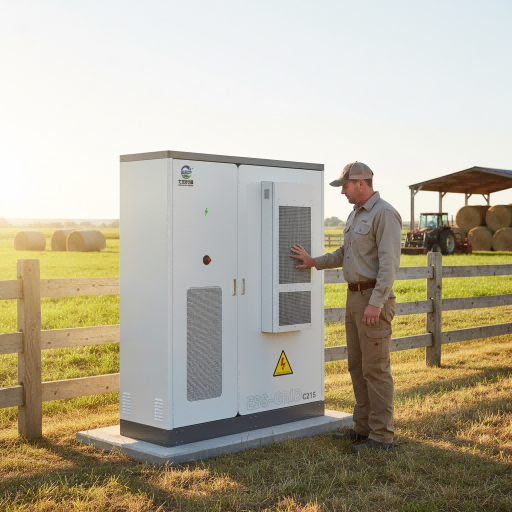
As we look toward the second half of the decade, C&I energy storage is no longer just a peripheral accessory to the power grid. It has evolved into a strategic asset that provides financial arbitrage, operational security, and environmental compliance. For the modern enterprise, the storage cabinet outside the factory gate is becoming as essential as the machinery inside.