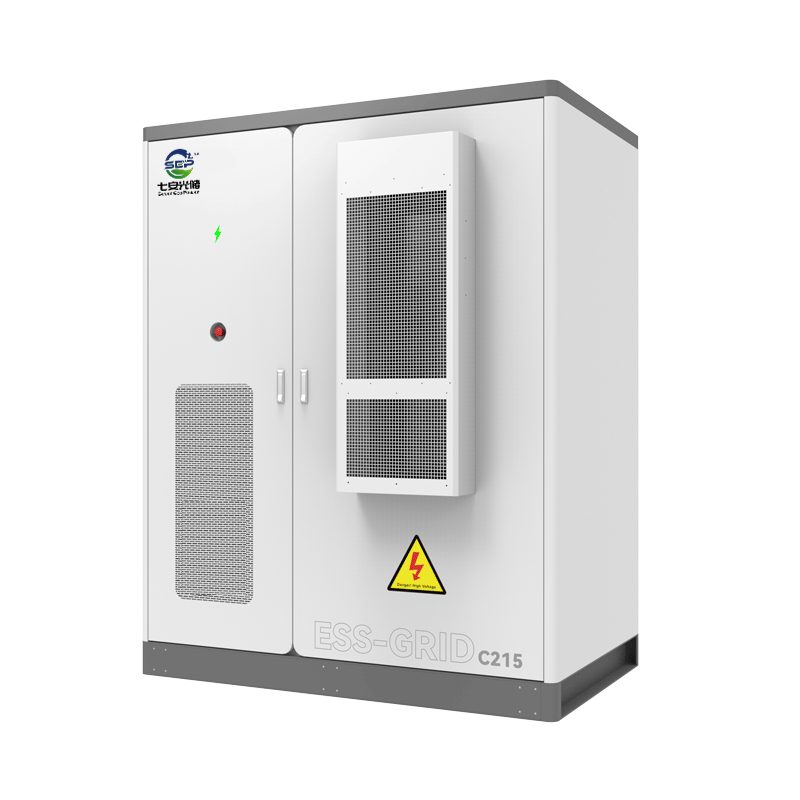
ESS-GRID C&I Power System
Modular ESS Architecture: Available in standard 100kWh, 200kWh, and 215kWh configurations. Engineered for multi-unit paralleling, supporting seamless expansion up to 2MWh utility-scale capacity to meet evolving energy demands.
Multi-Scenario Energy Deployment: Optimized for Commercial & Industrial (C&I) applications including agricultural facilities, hospitality, educational campuses, and Utility-scale solar farms. Supports versatile modes: Grid-tied (Peak Shaving), Off-grid (Island mode), and Hybrid configurations for maximum energy independence.
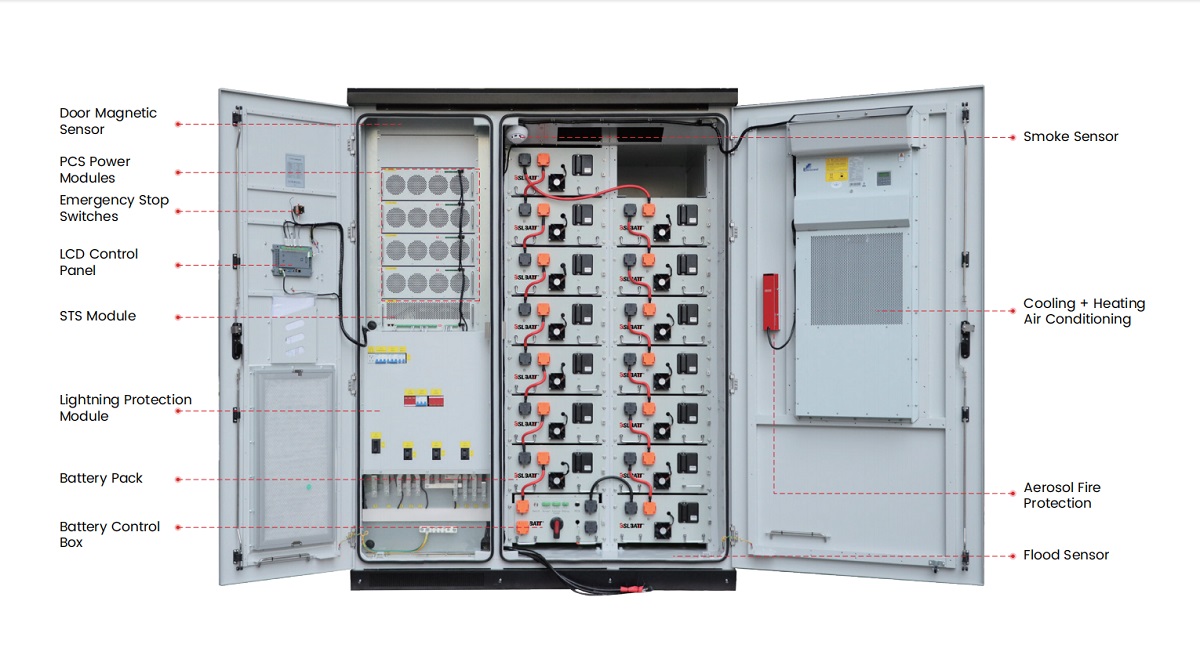
Tier-1 Safety Integration: Features a redundant Fire Suppression System (FSS) with options for Perfluorohexanone (FK-5-1-12), Aerosol, or Heptafluoropropane. Fully compliant with IEC 62619 and IEC 61000 international safety standards, ensuring long-term operational reliability and thermal stability.
Full-Stack Smart Integration: A "Plug-and-Play" solution compatible with high-voltage PV strings, STS (Static Transfer Switches), and isolation transformers. Integrated with an Intelligent Energy Management System (EMS) for real-time monitoring, remote O&M, and optimized power distribution.
Industrial-Grade Environmental Resilience: Features an IP54-rated weatherproof enclosure and advanced Active Air Cooling. Designed for stable operation in extreme climates ranging from -25°C to 60°C, making it the ideal choice for high-altitude or high-humidity installations.
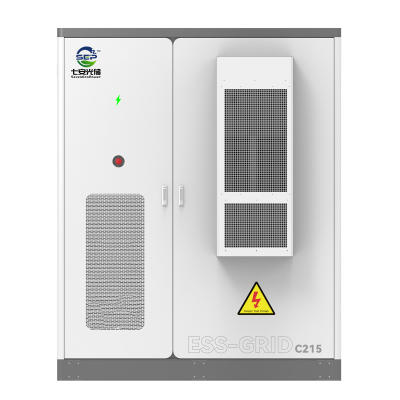
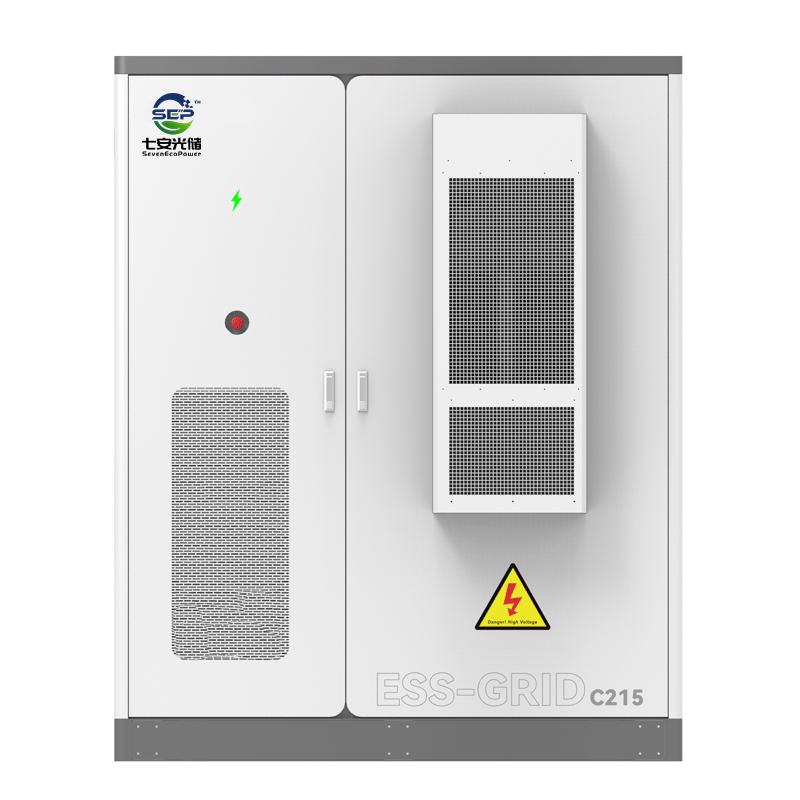
ESS-GRID Commercial & Industrial (C&I) Energy Storage Cabinet: The Ultimate Modular BESS Solution
The ESS-GRID Series represents the pinnacle of Integrated Energy Storage Systems (IESS), specifically engineered to navigate the complexities of modern Commercial & Industrial (C&I) energy demands. Whether you are managing a manufacturing facility, a remote mining operation, or a large-scale agricultural estate, the ESS-GRID provides a high-density, turnkey solution that bridges the gap between energy generation and consumption. Available in 100kWh, 200kWh, and 215kWh configurations, this modular architecture allows for seamless multi-unit paralleling, scaling effortlessly to a 2MWh utility-grade capacity.
1. High-Density Integration & Modular Scalability
The ESS-GRID is a "Master-Integrated" system, consolidating Grade-A Lithium Iron Phosphate (LiFePO4) battery banks, a high-efficiency Power Conversion System (PCS), an intelligent Battery Management System (BMS), and a sophisticated Energy Management System (EMS) into a single, compact outdoor cabinet.
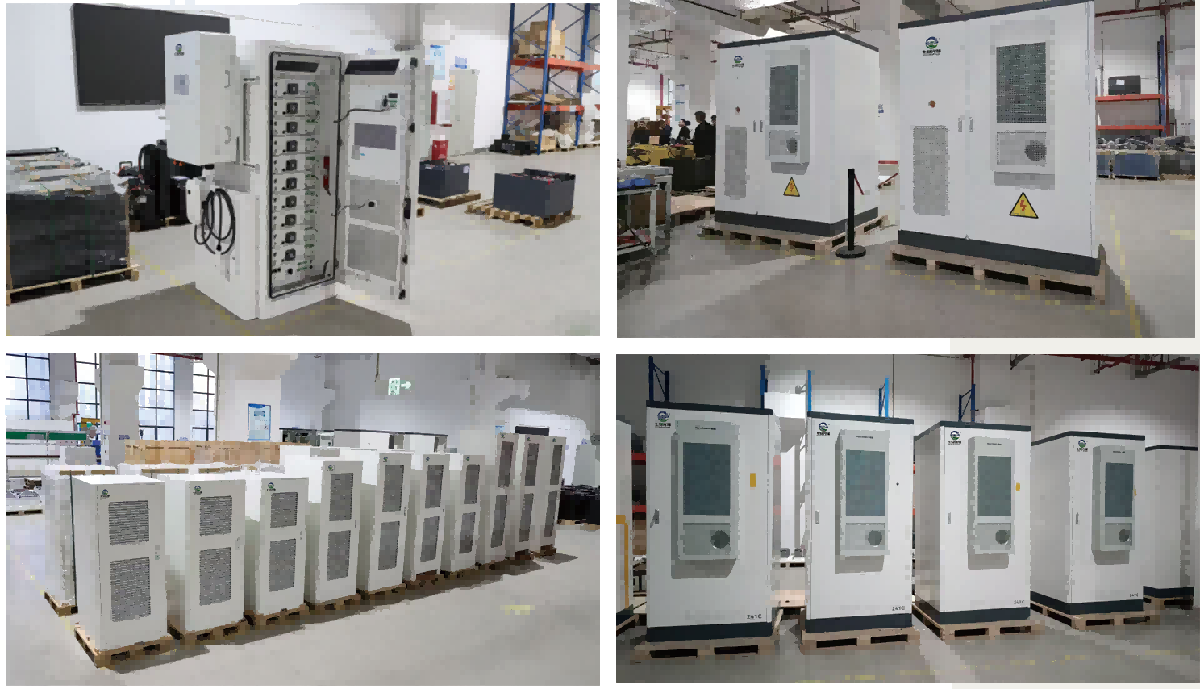
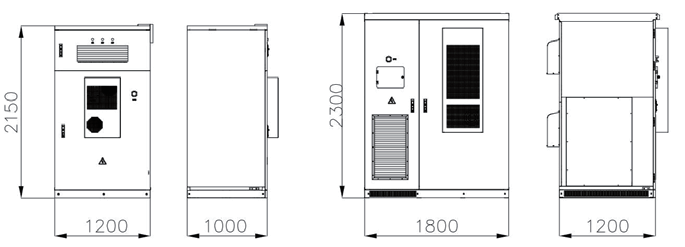
Optimized Footprint & Deployment: The pre-assembled, all-in-one design significantly minimizes site preparation costs and onsite wiring complexity. For example, the ESS-GRID C100 model features a compact cabinet dimension of 1200 × 1000 × 2150mm and weighs only 1750kg, allowing for transport through standard aisles.
Flexible Expansion Path: Starting from the C100, C200, and C215 sequences, businesses can adopt a "pay-as-you-grow" strategy. These units support modular stacking to meet the diverse needs of small businesses or large-scale industrial parks up to 2MWh.
Hybrid Energy Compatibility: Fully supports multi-source inputs including Photovoltaic (PV) arrays, Diesel Generators (DG), and the Utility Grid. The ESS-GRID C215 is equipped with dual MPPT PV charging modules, supporting 1000V DC input and seamless grid-tied/off-grid mode switching.
2. Tier-1 Safety Protocols & Long-Lifecycle Reliability
Safety is the cornerstone of the ESS-GRID engineering philosophy. We employ a Multi-level Fire Suppression System (FSS) to mitigate thermal runaway risks:
Triple-Layer Protection: Featuring PACK-level fireproof partitions, group-level aerosol extinguishing, and double-room isolation. The system supports Perfluorohexanone (FK-5-1-12) or Heptafluoropropane options with real-time monitoring of flammable gas, smoke, and temperature.
Premium Battery Chemistry: Powered by Class A LiFePO4 cells (such as the 205Ah cell in the B100 model) boasting a cycle life of over 6000 cycles (80% DOD) and a calendar life exceeding 10 years.
Environmental Resilience: With an IP54 rating and C4 corrosion protection (certified in Australian mining projects), the cabinet operates stably in extreme climates from -25°C to 60°C (or -20°C to 55°C depending on specific configuration).
3. Smart Energy Orchestration & High Conversion Efficiency
Equipped with a 3D Visualized Interface, the built-in EMS provides granular control over your energy assets:
Peak-to-Valley Arbitrage: Automatically optimizes charging during low-tariff hours and discharging during peak periods. A typical manufacturing plant can save over 300,000 yuan annually by deploying a 2MWh system.
Grid Ancillary Services: Supports Frequency Modulation and Demand Response (DR) with a rapid response time of <20ms. The bidirectional PCS achieves an AC/DC conversion efficiency of ≥95%, significantly higher than the industry average.
Intelligent Balancing: The smart BMS provides dynamic equalization management to minimize battery decay rates, ensuring the ESS-GRID C200 and other models maintain high efficiency at rated loads.
4. Low O&M Complexity & Rapid Maintenance
Designed for the real world, the ESS-GRID focuses on reducing the Levelized Cost of Storage (LCOS):
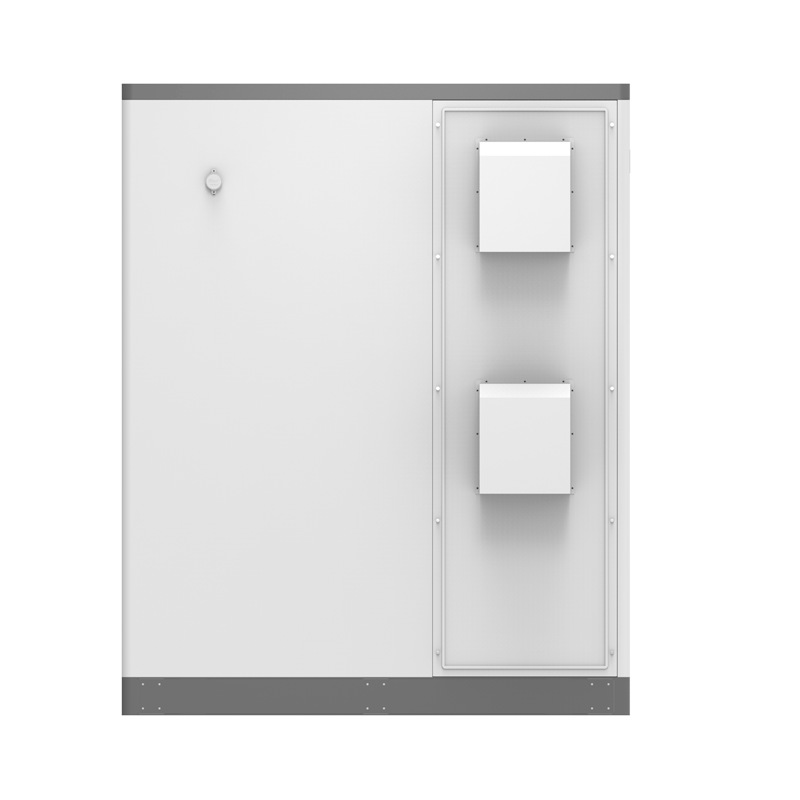
Serviceability: The front/rear double-door maintenance layout reduces the time required to replace crucial components to less than 30 minutes.
Component Versatility: Standardized 280Ah cells and BMS modules are compatible across different models, simplifying spare parts management.
Remote Management: Supports remote parameter configuration, fault diagnosis, and firmware upgrades, reducing the frequency of manual on-site inspections.
5. Global Compliance & Versatile Application Scenarios
The ESS-GRID is engineered to meet the most stringent international standards, including IEC 62619 (industrial battery safety) and IEC 61000 (electromagnetic compatibility), facilitating access to EU (CE) and North American (UL 9540) markets.
Microgrid & Off-grid Assurance: Ideal for remote mines and farms, reducing diesel consumption by more than 40% through PV-coupled energy self-sufficiency.
High-Density Scenarios: The ESS-GRID C215 liquid cooling design (maintaining temperature difference ≤3°C) meets ISO 13785-2 standards, making it suitable for high-thermal-density environments like data centers.
Product Specifications | |||
Product model | ESS-GRID C100 | ESS-GRID C200 | ESS-GRID C215 |
System Parameter | 50kW/105kWh | 100kW/200kWh | 100kW/215kWh |
Cooling Method | Air-cooled | ||
Battery Parameters | |||
Rated Battery Capacity | 105kWh | 200kWh | 215kWh |
Rated System Voltage | 512V | 716.8V | 768V |
Battery Type | |||
Cell Capacity | 205Ah | 280Ah | 280Ah |
Battery Series-parallel | 1P*16S*10S | 1P*14S*16S | IP*15S*16S |
PV Parameters | |||
Max. PV Input Voltage | 1000V | ||
MPPT Voltage Range | 200-850V | ||
General Parameters | |||
Protection Level | IP54 | ||
Fire Protection System | Aerosols/Perfluorohexanone/Heptafluoropropane | ||
Operating Temperature | -25~60°c(Derating Above 45°c) | ||
Poster Height | 3000m(>3000m Derating) | ||
Communication Interface | RS485/CAN2.0/Ethernet/Dry contact | ||
Dimension (W*H*D) | 1200*1000*2150mm | 1850*1000*2300mm | 1800*1200*2300mm |
Weight | 1750kg | 2920kg | 3020kg |
Certification | |||
Electric Safety | IEC62619/IEC62477/EN62477 | ||
EMC | IEC61000/EN61000/CE | ||
Grid-connected And Islanded | IEC62116 | ||
Energy Efficiency And The Environment | IEC61683/IEC60068 | ||
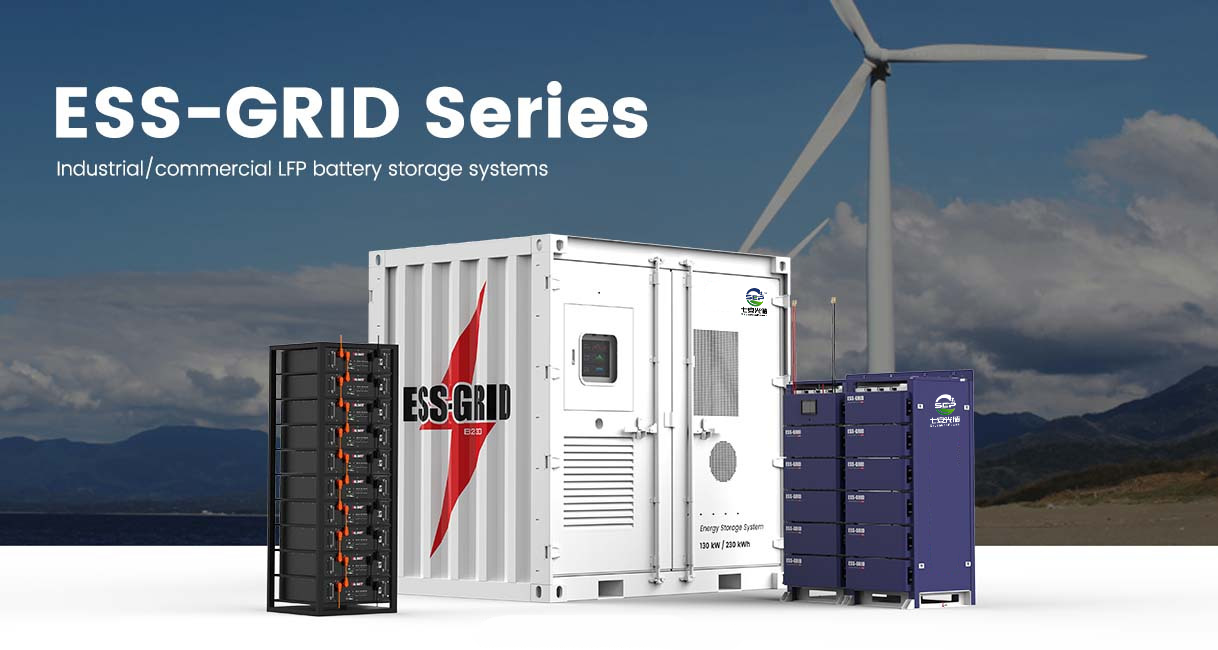
Note: The above models are typical configurations, and can also be used for micro-grid and other scenarios with optional photovoltaic charging modules, switching modules, industrial frequency transformers and other components, integrated optical storage, and integrated system cabinets.
Energy storage battery as a bridge to the energy transition
ESS-GRID C100/C200/C215 boasts outstanding performance, making it versatile for applications in farms, livestock, hotels, schools, warehouses, communities, and solar parks. It supports grid-tied, off-grid, and hybrid solar systems. This commercial energy storage system comes in three capacity options: 100kWh, 200kWh, and 215kWh, with the capability to scale up to a massive 2MWh through parallel connection.
System Productization